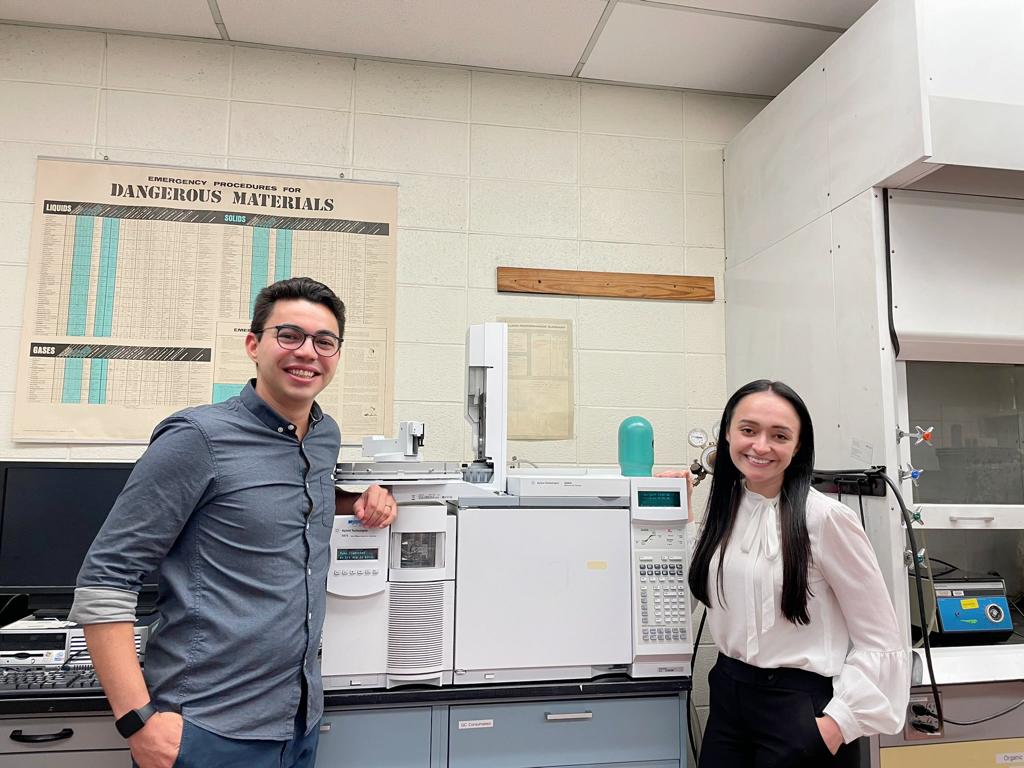
Dr. Dias is an Assistant Professor at the Department of Food Science and Nutrition at the University of Minnesota (U of M). She has a Ph.D. in Food Science and postdoctoral training in Analytical Chemistry from the University of Campinas, Brazil. She also was a postdoctoral scholar in Food Science at the University of California, Davis (UC-Davis).
Her research focuses on the use of analytical techniques and chemometrics tools to guide the development of environmentally friendly strategies to produce the next generation of health-promoting plant-based ingredients. She is especially interested in lipidomic markers of oil quality and extractability and bioactivity of phytochemicals. Her research aims to address critical issues faced by the food industry, which includes the development of sustainable processes for producing healthy and functional foods with minimal environmental impact to feed our steadily growing population.
Researcher Spotlight
What is your area of expertise?
My research focuses on the use of lipidomic approaches to investigate the chemical transformations of foods as a function of lipid oxidation and the effects of processing and storage on markers of oil quality. My research seeks to shed new light on how processing and storage affect the formation of oxidized lipid products and the off-flavor formation in foods.
How did you get to where you are now?
My passion for food was ignited at a young age, fostered by cherished moments spent with my Italian grandmother in the kitchen. During my undergraduate years, I was introduced to the captivating realm of analytical and food chemistry. This encounter served as a profound source of inspiration, propelling me toward an academic career. My academic journey led me to pursue a Ph.D. in Food Science, with a keen focus on mitigating one of the adverse aspects of the Maillard reaction – the formation of acrylamide. Following my doctoral studies, I started a postdoctoral research position in Analytical Chemistry within the Department of Chemistry at the University of Campinas, Brazil. I also had the privilege to serve as a postdoctoral scholar at the University of California, UC Davis. Today, I am honored to hold a faculty position in the Department of Food Science and Nutrition at the University of Minnesota, where I continue to explore the multifaceted world of Food Chemistry, driven by the same passion that ignited my journey many years ago.
Where do you see plant proteins research going over the next decade?
Plant protein research in the next decade will likely be characterized by a multidisciplinary approach, aiming to address the challenges of extractability, functionality, sustainability, nutrition, and consumer acceptance while exploring innovative sources and technologies to meet the world's protein needs. The integration of plant proteins into food products often encounters challenges, resulting in reduced consumer acceptability due to a multitude of unfavorable sensory characteristics, including off-flavors and other sensory aspects. To address this issue, it is imperative to gain a more profound understanding of the flavor/off-flavor formation in plant protein. Such insight will empower us to develop refined processing methods that enhance product appeal, ultimately leading to greater consumption and positive impacts on both health and the environment.
How would you like to contribute to this body of research?
I plan to contribute to the advancement of plant protein research by understanding the role of lipids on bitter taste and off-flavor formation aiming at the development of environmentally friendly strategies to mitigate those issues. My present and future research can significantly contribute to the challenge of creating sustainable pathways for food production by developing and optimizing extraction processes and analytical methods that maximize value and minimize negative consequences for all stakeholders, including producers, consumers, and the environment.
What are some of your current ongoing research projects?
My current research projects focus on understanding the effects of different green extraction techniques and off-flavor mitigation strategies on the primary and secondary lipid oxidation products in plant proteins and oils, intending to mitigate off-flavor formation and enhance the overall acceptability of plant proteins.
Which plant proteins are you most intrigued by?
Oilseed-derived proteins have captured my interest because they offer an engaging challenge: discovering sustainable and efficient extraction techniques that not only preserve protein functionality and nutritional aspects and reduce off-flavor formation but also eliminate the requirement for flammable solvents in the process.